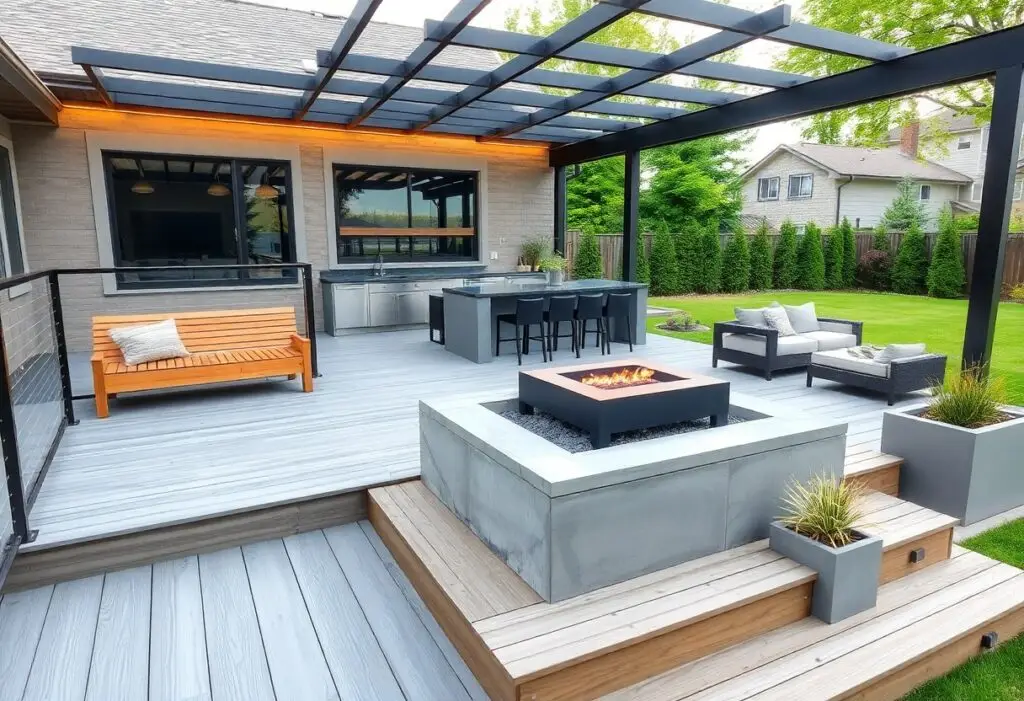
Trends in deck design are shifting toward sustainable materials and multifunctional layouts that expand your outdoor living space. You’re seeing increased use of composite decking, which resists rot and requires less maintenance. Hidden fasteners create clean, sleek surfaces, while integrated lighting enhances safety and ambiance. Some designs now include built-in fire features, which add warmth but require careful placement to meet safety codes.
The Simple Steel Frame
Steel is redefining outdoor structure design with clean, minimalist lines and long-term resilience. You’re choosing strength without sacrificing style, as this material supports larger spans with fewer posts. Its resistance to warping and pests makes it ideal for modern deck builds that prioritize both form and function.
Clean Black Lines
Black steel frames create bold visual contrast against natural surroundings. You’ll notice how these sleek profiles draw the eye and define space without overwhelming it. The dark finish hides imperfections and reduces maintenance, giving your deck a sharp, contemporary edge that lasts.
Hidden Fasteners
Fastener-free decking surfaces offer a smooth, uninterrupted look you can’t achieve with visible screws. You get a cleaner aesthetic and safer surface for bare feet. Eliminating exposed hardware also reduces long-term wear and corrosion risks.
Hidden fasteners work by using side clips or grooved board systems that secure each plank from the side, keeping the top surface completely smooth. You benefit from a seamless appearance that enhances the wood or composite’s natural beauty. These systems also minimize thermal expansion damage and prevent water pooling around screw heads, extending your deck’s lifespan with less upkeep.
Tropical Hardwoods
You’re seeing heavy tropical woods dominate high-end deck designs this year. Their exceptional durability and rich, deep tones make them a top choice for lasting outdoor elegance. These dense hardwoods resist rot, insects, and wear far better than most alternatives, ensuring your deck remains stunning with minimal upkeep over time.
Brazilian Ipe
You’ll find Brazilian Ipe stands out for its extreme hardness and resistance to fire, moisture, and decay. This dense tropical timber weathers gracefully and maintains structural integrity for decades. Its rich, chocolate-brown hue adds luxury, though proper sourcing is imperative due to environmental concerns.
Natural Silver Aging
You can embrace the natural silver-gray patina that untreated wood develops over time. This look is low-maintenance and aesthetically modern, blending seamlessly with natural landscapes. Many homeowners now choose to skip stains, letting their decks age with character and authenticity.
Choosing to allow natural silver aging means accepting the wood’s transformation as part of its story. UV exposure and moisture gradually shift the surface to a soft, silvery tone, which many find more appealing than artificial finishes. As long as the wood is properly installed and kept clear of debris, this aging process is completely safe and enhances longevity by forming a protective outer layer.
The Low Fire Pit
You’re seeing low fire pits everywhere this year, and for good reason. Their compact, ground-level design creates a safe, inviting focal point without dominating your deck space. Perfect for intimate gatherings, they radiate warmth while maintaining clean sightlines and a modern aesthetic.
Sunken Seating
You gain a sleek, built-in look with sunken seating that integrates directly into your deck’s structure. This design maximizes space and encourages relaxed conversation. Its low profile enhances safety and gives your outdoor area a custom, architectural feel.
Stone and Flame
You combine durability with drama when choosing stone and flame for your fire feature. Natural stone surrounds add texture and elegance, while the open flame delivers unmatched ambiance. This pairing stands out for its timeless appeal and sensory impact.
Stone and flame work together to create a sensory centerpiece that’s both functional and artistic. You feel the radiant heat while enjoying the flicker of fire dancing across textured stone surfaces. Using non-combustible stone materials ensures long-term safety and reduces maintenance. Whether you opt for stacked limestone or rugged basalt, the natural variation in color and form gives your fire pit a unique character that synthetic materials can’t replicate.
The Wall of Glass
You’re seeing more outdoor spaces blur the boundary between inside and out, thanks to floor-to-ceiling glass railings. This trend maximizes natural light while offering unobstructed views, making small decks feel larger and more connected to the landscape. Clean lines and minimal framing keep the focus on the scenery, not the structure.
Unbroken Sight Lines
Clear glass panels eliminate visual clutter, giving you a continuous view of your yard or horizon. You’ll feel more immersed in nature without the distraction of balusters or opaque materials. This openness enhances both spaciousness and serenity, especially in elevated or scenic locations.
Seamless Transitions
Matching your indoor flooring with outdoor porcelain or composite decking creates a smooth flow between spaces. You walk from room to deck without a step or visual break, reinforcing a unified living area. The effect is subtle but powerful in modern home design.
When your interior and exterior surfaces align in color, texture, and height, the transition feels natural, not forced. You extend your living space visually and physically, inviting more outdoor use. This design choice works especially well with open-concept layouts and sliding or folding glass walls that disappear when open.
Light for the Night
You transform your deck into an inviting evening retreat with strategic lighting. Thoughtful illumination extends usability after sunset while enhancing safety on steps and edges. Subtle, well-placed lights create ambiance without glare, letting you enjoy the space long after daylight fades.
Recessed Step Glow
Embedded within treads, these discreet fixtures guide each footfall with a soft halo. You prevent missteps by highlighting elevation changes without drawing attention to the hardware itself. Their low profile maintains clean lines while offering vital nighttime visibility.
Post Cap Lamps
Top-mounted and stylish, these fixtures combine form and function. You gain focused downward light that defines your deck’s perimeter. Their easy installation and variety of finishes let you match your aesthetic while improving after-dark usability.
Post cap lamps do more than just illuminate—they reinforce your deck’s design language. You choose from materials like brushed aluminum, copper, or matte black to coordinate with railings and furniture. Solar-powered options cut wiring needs, while LED bulbs ensure long-term efficiency. The consistent glow along the railing creates a welcoming path and deters intruders by removing dark corners. With minimal upkeep and strong durability, they deliver lasting value.
Composite Decking
You’re seeing man-made boards dominate modern decks for good reason. These materials offer long-term durability without the maintenance demands of wood. With realistic grain finishes and fade-resistant pigments, they mimic natural timber while resisting rot, insects, and warping—making them a smart investment for any homeowner.
Recycled Plastic Blends
Recycled plastic blends are redefining eco-friendly decking. You’ll appreciate how these boards turn post-consumer waste into high-performance surfaces that resist moisture and never rot. Their low environmental impact paired with zero need for staining or sealing makes them a practical, planet-conscious choice.
Heat Shield Surfaces
Heat Shield Surfaces keep your deck comfortable even in peak sun. You no longer have to worry about scorching planks under bare feet. These advanced coatings reflect solar radiation, resulting in up to 35°F cooler surfaces than standard composites—delivering real comfort and safety.
Heat Shield Surfaces use specialized mineral-based pigments and reflective technology embedded directly in the cap layer. You get consistent performance without fading over time. Unlike surface sprays that wear off, this protection is permanent and maintenance-free, ensuring your deck stays safe and comfortable for kids and pets all summer long.
Final Thoughts
The most popular deck design trends this year reflect your desire for outdoor spaces that blend style and function. You’re choosing natural materials, multi-level layouts, and integrated lighting to create inviting areas for living and entertaining. Warm wood tones, minimalist railings, and seamless indoor-outdoor flow define what you value now—beauty, simplicity, and year-round usability.
FAQ
Q: What are the most popular materials used in deck designs this year?
A: Composite decking continues to dominate the market due to its low maintenance and durability. Made from a blend of wood fibers and plastic, it resists fading, scratching, and mold better than traditional wood. Homeowners are choosing composite boards in matte finishes and realistic wood-grain textures for a natural look without the upkeep. Cedar and redwood remain popular among those who prefer natural wood, but they require more frequent sealing and staining to maintain their appearance.
Q: How are homeowners using lighting in modern deck designs?
A: Integrated LED lighting is a popular feature in modern deck designs, with lights built into railings, steps, and deck edges for both safety and ambiance. Solar-powered options are rising in popularity because they’re energy-efficient and easy to install. Many people are opting for warm white tones to create a cozy atmosphere, especially in evening settings. Some designs include smart lighting systems that allow control via smartphone apps, letting users adjust brightness and color to match the mood or occasion.
Q: Are multi-level decks still in style, and how are they being used?
A: Multi-level decks are more popular than ever, especially in homes with sloped yards or open-concept outdoor spaces. These designs separate functional zones—like dining, lounging, and cooking-without walls or fences. A lower level might feature a fire pit or outdoor sofa, while the upper deck holds the grill and dining table. The tiered layout adds visual interest and makes better use of space. Contractors are using consistent materials across levels to maintain a cohesive look while enhancing flow between areas.